

Table of Contents
Growing companies face a common challenge. They need executive-level sales leadership but cannot justify full-time executive costs. Therefore, many businesses now turn to fractional sales leaders for strategic guidance without breaking the bank.
This comprehensive guide explores what is a fractional sales leader and how this innovative model transforms sales performance for growing businesses.
Understanding What Is a Fractional Sales Leader
A fractional sales leader provides executive-level sales management on a part-time basis. Unlike full-time executives, they work with multiple clients simultaneously. Moreover, they bring extensive experience managing sales teams and driving revenue growth.
These professionals typically engage through flexible arrangements. Consequently, companies access C-suite sales expertise at manageable monthly rates. They handle everything from team development to strategic planning, scaling their involvement based on your business needs.
The term “fractional” refers to two key aspects. First, the sales leader provides a fraction of their total time. Second, companies pay a fraction of what full-time executive compensation would cost.
Build faster with the right operator by your side
Veep connects founders with vetted, senior operators who embed quickly and execute when it matters most.
Evolution of Fractional Sales Leadership
Fractional sales leadership emerged as businesses recognized hiring challenges. Finding qualified full-time sales managers proved nearly impossible for small companies. Furthermore, traditional sales manager roles often didn’t provide enough challenge for experienced executives.
This model gained traction around the mid-2000s. However, it has evolved significantly over the past two decades. Today, fractional sales leadership represents a mature, proven approach to scaling sales operations cost-effectively.
The COVID-19 pandemic accelerated adoption of virtual work models. Therefore, geographic limitations disappeared entirely. Companies can now engage top sales leaders regardless of location.
Core Responsibilities of Fractional Sales Leaders
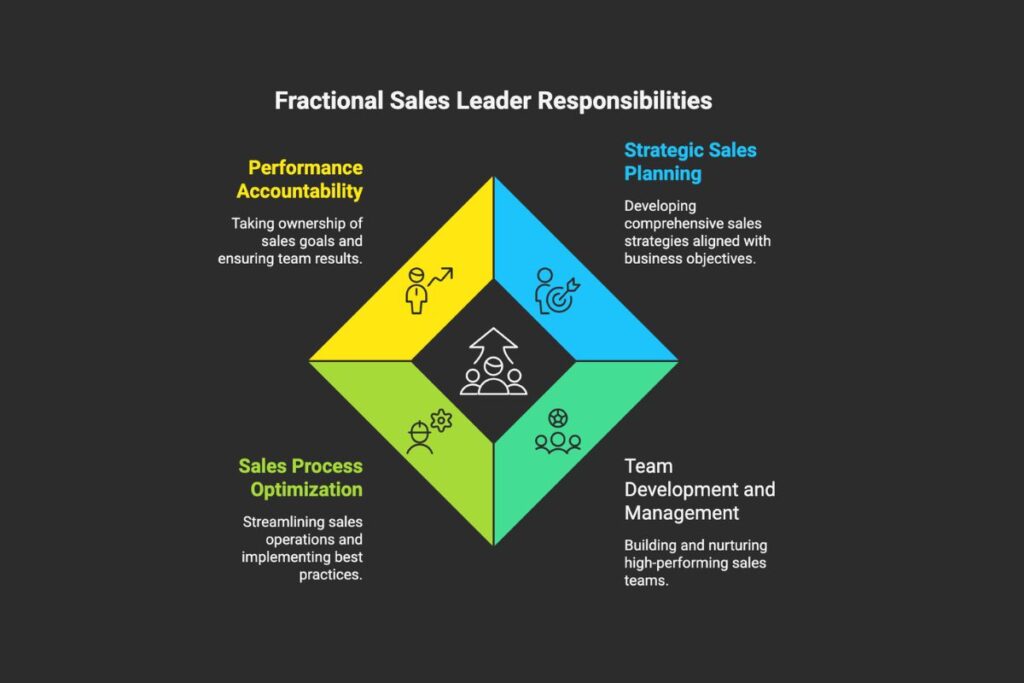
Understanding what is a fractional sales leader requires examining their key responsibilities. These professionals wear multiple hats within your organization.
Strategic Sales Planning
Fractional sales leaders develop comprehensive sales strategies aligned with business objectives. They analyze market opportunities and competitive landscapes. Additionally, they create actionable roadmaps guiding all sales activities.
Their strategic planning encompasses target market definition and sales process design. Moreover, they establish performance metrics measuring progress toward goals. Consequently, every sales initiative supports overarching business objectives.
Team Development and Management
Building high-performing sales teams represents a critical responsibility. Fractional sales leaders hire new salespeople when needed. They also coach existing team members and address performance issues directly.
Their team management includes conducting regular one-on-one sessions. Furthermore, they lead weekly sales meetings and provide ongoing training. Therefore, salespeople continuously develop their skills and capabilities.
Sales Process Optimization
Effective fractional sales leaders streamline sales operations. They document processes and implement best practices. Additionally, they identify inefficiencies and recommend improvements.
Their process work often includes CRM strategy and implementation. Moreover, they establish reporting systems providing visibility into sales activities. Consequently, leadership gains clear insights into team performance.
Performance Accountability
Fractional sales leaders take ownership of sales goals. They accept full accountability for team results. Furthermore, they confront poor performance and make difficult personnel decisions.
This accountability distinguishes them from consultants or coaches. Therefore, they function as genuine sales managers rather than external advisors. Additionally, they align their success directly with your business outcomes.
For companies needing additional support beyond sales leadership, exploring virtual assistant services can help streamline operations and free up leadership time.
Build faster with the right operator by your side
Veep connects founders with vetted, senior operators who embed quickly and execute when it matters most.
How Fractional Sales Leaders Differ from Alternatives
Many businesses confuse fractional sales leaders with other sales support options. Understanding these distinctions helps you make informed hiring decisions.
Fractional Sales Leaders vs. Sales Consultants
Sales consultants typically focus on specific projects or challenges. They analyze situations and recommend solutions. However, they rarely implement recommendations or manage teams directly.
In contrast, fractional sales leaders execute strategies themselves. Moreover, they take ongoing responsibility for sales outcomes. Therefore, they provide hands-on leadership rather than advisory services.
Fractional Sales Leaders vs. Sales Coaches
Sales coaches concentrate on skill development and technique improvement. They work with individual salespeople on messaging and conversations. Additionally, they provide training on specific sales methodologies.
Fractional sales leaders incorporate coaching but offer much more. Furthermore, they handle hiring, firing, and strategic planning. Consequently, they provide comprehensive sales management rather than skill development alone.
Fractional Sales Leaders vs. Full-Time Sales Managers
Full-time sales managers work exclusively for one company. They’re permanent team members with long-term commitments. Moreover, they typically cost $150,000-$250,000 annually including benefits.
Fractional sales leaders offer comparable expertise at 30-50% of full-time costs. However, small business sales roles often lack sufficient challenge for experienced managers. Therefore, fractional arrangements create better fits for both parties.
Key Benefits of Hiring Fractional Sales Leaders
Understanding what is a fractional sales leader reveals significant advantages for growing companies. These benefits extend across financial, operational, and strategic dimensions.
Cost-Effective Executive Expertise
Fractional sales leaders deliver exceptional value relative to cost. Monthly retainers typically range from $3,000 to $10,000. Consequently, companies access senior leadership without six-figure commitments.
This cost efficiency allows better budget allocation. Therefore, you invest saved resources into marketing, technology, and team development. Additionally, you avoid recruitment fees and onboarding expenses.
Immediate Impact and Results
Experienced fractional sales leaders hit the ground running. They quickly assess current situations and identify improvement opportunities. Moreover, they implement proven strategies generating rapid results.
Their extensive experience accelerates time to value. Furthermore, they’ve solved similar challenges across multiple companies. Consequently, they avoid common pitfalls and apply best practices immediately.
Flexibility and Scalability
Fractional engagements adapt to changing business needs. You can increase involvement during critical periods. Additionally, you can reduce hours during slower seasons.
This scalability proves invaluable for growing businesses. Moreover, you only pay for expertise when you need it. Therefore, fractional leadership grows alongside your company.
Objective Outside Perspective
External fractional leaders bring fresh viewpoints to sales operations. They identify blind spots internal teams miss. Furthermore, they remain free from office politics and internal biases.
Their objectivity enables honest assessments and tough recommendations. Therefore, they challenge status quo thinking and drive innovation. Additionally, they provide clarity unencumbered by organizational history.
For businesses seeking to optimize operations across departments, partnering with virtual assistant providers complements fractional sales leadership effectively.
Build faster with the right operator by your side
Veep connects founders with vetted, senior operators who embed quickly and execute when it matters most.
When Companies Should Hire Fractional Sales Leaders
Timing matters significantly when engaging fractional sales leadership. Several situations indicate optimal hiring moments.
Experiencing Sales Plateaus
Companies hitting sales ceilings benefit tremendously from fractional leaders. Current strategies and people stopped producing growth. Moreover, owners lack expertise scaling sales operations.
Fractional sales leaders diagnose plateau causes quickly. Furthermore, they implement changes breaking through limitations. Consequently, sales momentum resumes under expert guidance.
Preparing for Significant Growth
Rapid expansion requires robust sales infrastructure. Fractional sales leaders build scalable systems supporting growth. Additionally, they establish processes that maintain quality during scaling.
Their experience with growth companies proves invaluable. Moreover, they anticipate challenges before they become crises. Therefore, expansion proceeds smoothly with proper leadership.
Lacking Sales Management Expertise
Many business owners excel at selling but struggle managing salespeople. Developing others requires different skills than personal selling. Furthermore, most owners lack time for proper sales management.
Fractional sales leaders fill this expertise gap immediately. They bring proven methodologies and management experience. Consequently, sales teams receive professional leadership they deserve.
Transitioning Between Full-Time Managers
Sales manager turnover creates leadership voids. Fractional leaders provide stability during transitions. Moreover, they can help recruit and onboard permanent replacements.
Their interim leadership prevents performance degradation. Furthermore, they maintain accountability and momentum. Therefore, transitions happen smoothly without revenue loss.
What to Look for When Hiring Fractional Sales Leaders

Selecting the right fractional sales leader requires careful evaluation. Several critical factors determine partnership success.
Relevant Industry Experience
Industry knowledge accelerates value delivery and credibility. Leaders familiar with your market understand buyer behaviors. Moreover, they possess established industry networks and relationships.
However, don’t discount talented leaders from adjacent industries. Sometimes fresh perspectives yield breakthrough innovations. Therefore, balance industry experience against overall leadership capabilities.
Proven Track Record
Evaluate candidates based on demonstrated results. Request case studies showing measurable outcomes they’ve achieved. Furthermore, ask for references from companies similar to yours.
Strong candidates articulate clear methodologies and success frameworks. They explain how they’ve overcome challenges like yours. Moreover, they provide specific examples rather than vague promises.
Leadership and Management Philosophy
Assess how candidates approach sales leadership and team development. Their management philosophy should align with your company culture. Additionally, consider their communication style and interpersonal approach.
Ask how they handle underperformance and difficult conversations. Furthermore, understand their coaching methodology and development processes. Therefore, ensure their leadership style fits your organization.
Fractional Experience
Working fractionally requires different skills than traditional management. Effective fractional leaders maximize limited time efficiently. Moreover, they build trust quickly and communicate proactively.
Ask about their current client portfolio and time management. Furthermore, understand how they prioritize activities across multiple engagements. Consequently, you gauge their fractional expertise accurately.
Cultural Fit
Fractional sales leaders integrate into your leadership team. They must align with your values and work style. Additionally, they should complement rather than clash with existing personalities.
Involve other leaders in interview processes. Furthermore, consider trial periods assessing compatibility. Therefore, you ensure long-term partnership success.
Maximizing Value from Fractional Sales Leadership
Once hired, optimize your fractional sales leader relationship for maximum impact. Clear expectations and strong collaboration ensure success.
Establish Clear Objectives
Begin engagements by defining specific, measurable goals. Determine what success looks like for your partnership. Additionally, agree on key performance indicators tracking progress.
These objectives might include revenue targets or team development goals. Furthermore, establish timelines for achieving different milestones. Consequently, both parties maintain focus and accountability.
Provide Complete Access
Your fractional sales leader needs full visibility into relevant information. Share financial data, customer insights, and strategic plans. Moreover, grant access to CRM systems and performance analytics.
This transparency enables better decision-making and strategy development. Therefore, don’t withhold information that could inform approaches. Additionally, introduce them to key stakeholders early.
Maintain Consistent Communication
Schedule regular check-ins reviewing progress and priorities. Weekly or biweekly meetings work well for most engagements. Moreover, maintain open channels for urgent questions or decisions.
These consistent touchpoints ensure alignment and momentum. Furthermore, they provide opportunities addressing challenges promptly. Consequently, your sales efforts stay on track.
Empower Decision-Making
Trust your fractional sales leader’s expertise and judgment. Empower them making tactical decisions within agreed parameters. However, involve them in strategic discussions affecting sales direction.
This balance of autonomy and collaboration maximizes effectiveness. Moreover, it demonstrates respect for their professional experience. Therefore, you attract and retain top fractional talent.
Integrate Them Into Your Team
Treat fractional sales leaders as valued team members. Include them in relevant meetings and strategic discussions. Additionally, encourage collaboration with other departments.
This integration fosters better cross-functional alignment. Furthermore, it ensures sales strategies account for broader business considerations. Consequently, marketing, operations, and sales work cohesively.
If you’re building comprehensive remote teams to support growth, exploring hiring virtual assistants can complement your fractional sales leadership investment.
Build faster with the right operator by your side
Veep connects founders with vetted, senior operators who embed quickly and execute when it matters most.
Common Mistakes to Avoid
Many companies make predictable errors when engaging fractional sales leaders. Awareness helps you avoid these pitfalls.
Insufficient Time Allocation
Some businesses engage fractional leaders for too few hours. Complex sales challenges require adequate time investment. Moreover, strategic work demands thoughtful analysis that cannot be rushed.
Match time commitments to actual needs and objectives. If budget constraints limit hours, prioritize highest-impact activities. However, recognize insufficient time produces suboptimal results.
Unclear Expectations
Vague objectives and undefined success criteria doom partnerships. Establish specific deliverables and performance expectations upfront. Moreover, document agreements preventing misunderstandings.
Without clarity, fractional sales leaders cannot prioritize effectively. Therefore, invest time defining what you want accomplished. Additionally, revisit expectations regularly as priorities evolve.
Resistance to Change
Sales transformation requires organizational change and adaptation. Resisting recommended changes undermines fractional leader effectiveness. Therefore, approach engagements with openness to new approaches.
Your fractional sales leader brings expertise specifically to improve situations. Consequently, dismissing their recommendations defeats partnership purpose. Additionally, explain concerns rather than simply rejecting suggestions.
Treating Them as Outsiders
Fractional sales leaders need integration into your organization. Treating them as external contractors limits effectiveness. Moreover, it prevents building trust necessary for leadership.
Include them in company communications and cultural activities. Furthermore, position them as sales department leaders to your team. Therefore, they gain respect and authority needed for impact.
Measuring Fractional Sales Leader Impact
Track concrete metrics demonstrating your fractional sales leader’s contribution. Clear measurement validates investment and guides optimization.
Revenue Growth Metrics
Monitor overall sales revenue before and during engagement. Track both gross revenue and revenue growth rates. Additionally, measure revenue per salesperson for productivity insights.
These fundamental metrics reveal basic effectiveness. Moreover, they demonstrate clear business impact. Consequently, you justify continued fractional leadership investment.
Sales Team Performance
Assess individual salesperson performance against quotas. Track percentage of team members achieving goals. Furthermore, monitor improvement rates for underperforming salespeople.
Team performance metrics indicate leadership quality. Therefore, these measurements show development effectiveness. Additionally, they highlight coaching and management impact.
Sales Process Efficiency
Measure sales cycle length and conversion rates. Track how quickly leads move through your pipeline. Moreover, monitor win rates at each stage.
Process efficiency improvements demonstrate operational impact. Furthermore, they reveal where fractional leaders optimize systems. Consequently, you see value beyond just revenue numbers.
Customer Acquisition Cost
Calculate customer acquisition costs before and during engagement. Track efficiency gains across channels and campaigns. Additionally, monitor lifetime value improvements from better targeting.
Lower acquisition costs directly improve profitability. Therefore, these metrics prove marketing optimization success. Moreover, they guide resource allocation toward efficient tactics.
Frequently Asked Questions
What is a fractional sales leader?
A fractional sales leader is a part-time executive who provides strategic sales management and leadership to companies. They work with multiple clients simultaneously, offering extensive sales expertise without full-time employment costs. Moreover, they take accountability for sales goals and team performance.
How much does a fractional sales leader cost?
Fractional sales leader costs vary based on experience and engagement scope. Monthly retainers typically range from $3,000 to $10,000. Hourly rates generally fall between $150 and $400. Your specific needs and the leader’s expertise determine final pricing.
How is a fractional sales leader different from a sales consultant?
Fractional sales leaders manage teams and take accountability for results. Sales consultants typically provide advice and recommendations without implementation responsibility. Furthermore, fractional leaders function as your sales manager, while consultants remain external advisors.
What size company benefits from fractional sales leadership?
Companies with $1-20 million in revenue benefit most from fractional sales leaders. They need professional sales management but cannot justify full-time executive costs. However, both smaller startups and larger firms also engage fractional leaders for specific needs.
How long should we work with a fractional sales leader?
Engagement length depends on your goals and situation. Some projects last 3-6 months for specific initiatives. However, many successful relationships continue for years as ongoing partnerships. Therefore, evaluate needs quarterly and adjust accordingly.
Can fractional sales leaders work remotely?
Yes, most fractional sales leaders work remotely very effectively. Modern technology enables virtual team management and coaching. Moreover, many had virtual management experience before remote work became common. Therefore, geographic location rarely limits fractional engagements.
Do fractional sales leaders hire and fire salespeople?
Yes, hiring and firing typically fall within fractional sales leader responsibilities. They execute recruitment processes and make personnel decisions. Moreover, they handle performance management including difficult terminations. This accountability distinguishes them from consultants or coaches.
Conclusion
Understanding what is a fractional sales leader reveals powerful opportunities for growing businesses. These part-time executives deliver strategic expertise, proven methodologies, and measurable results without full-time costs. Moreover, they provide flexibility, objectivity, and immediate impact that traditional hiring cannot match. By combining experienced leadership with cost-effective engagement models, fractional sales leaders help companies break through plateaus and achieve sustainable growth.

The Veepwork Team is a collective of experienced operators, founders, and senior leaders who have built, scaled, and optimized companies from early stage to the Fortune 500. Drawing on real-world execution across fundraising, operations, product, and growth, the team shares practical insights to help founders move faster and make better decisions when the stakes are high.