
Table of Contents
Startups don’t fail because they lack vision. They fail because they can’t execute at speed, because their processes break as they scale, and because they spend too much money doing the wrong things. That is precisely the problem operational efficiency consulting for startups exists to solve.
In 2025, the market for startup consulting has matured significantly. Global venture capital investment reached $368.3 billion in 2024, even as investor diligence deepened and capital efficiency became a primary criterion for continued funding. Founders who want to survive and grow in this environment cannot afford the luxury of figuring out operations through trial and error. They need proven frameworks, experienced advisors, and measurable results – delivered fast.
This guide covers everything you need to know about the best operational efficiency consulting options for startups in 2025: what they do, how they price, how to evaluate them, who the leading providers are, and what alternatives exist to the traditional Big 3 model.
What Operational Efficiency Consulting Actually Does for Startups
Before evaluating any consulting firm or advisor, it’s important to be precise about what operational efficiency consulting actually delivers. The term covers a wide range of services, and the best engagement for your startup depends entirely on where your specific friction lives.
At its core, operational efficiency consulting helps you do more with less. Consultants analyze your current processes, identify where time and money are being wasted, redesign workflows, implement better systems, and – critically – help you actually execute the changes rather than simply handing you a report.
Unlike general business strategy advisors who focus on market positioning or corporate planning, operational efficiency consultants are hands-on problem solvers focused on how work actually gets done. They deploy established methodologies including Lean, Six Sigma, and DMAIC to reduce defects and variability. They introduce automation through ERP and RPA systems. They restructure team accountabilities and redesign workflows to handle higher volume as you scale.
For startups specifically, the highest-value applications of operational efficiency consulting include building repeatable revenue processes so that growth doesn’t depend on heroic individual effort, redesigning customer onboarding to reduce time-to-value, eliminating operational bottlenecks that create support debt, implementing FinOps and cost controls that protect runway, and building the internal systems and dashboards that investors expect to see.
Research from BCG shows that companies with strong operational excellence achieve 25% higher growth and 75% higher productivity than their peers. Operational improvements consistently reduce operations overhead by 15 to 30%. For a startup burning $400,000 per month, a 20% reduction in operational overhead extends the runway by months – often the difference between reaching the next milestone and running out of capital.
Strategy Consulting vs. Operational Consulting vs. Fractional Executives: What Startups Actually Need
Founders evaluating consulting options often conflate three distinct categories: strategy consulting, operational consulting, and fractional executive services. Understanding the differences matters enormously before you invest.
Strategy consulting focuses on the “what” – market opportunity, product positioning, competitive dynamics, and long-term direction. Traditional strategy firms like McKinsey, BCG, and Bain excel at this. However, their engagements are expensive, typically oriented toward large enterprises, and often deliver polished recommendations without hands-on implementation accountability. The result is what TechTide Solutions aptly calls “elegant PDFs” – strategic plans that look impressive but never translate into daily execution.
Operational consulting focuses on the “how” – how work flows, where it breaks, how to fix it, and how to build systems that scale. Operational efficiency consultants are embedded practitioners who work alongside your team to implement changes, not just recommend them.
Fractional executive services – particularly fractional COOs and fractional CMOs – blur the line between consulting and leadership. They embed within your organization in a part-time senior leadership role, owning outcomes directly rather than advising from the outside. Firms like ScaleUpExec operate in this model: every team member has personally scaled businesses to eight or nine figures, often through successful exits, and they work directly alongside your team making decisions and driving results rather than delivering decks.
For most early and growth-stage startups, the operational consulting and fractional executive models deliver significantly better ROI than pure strategy consulting. Pure strategy is most valuable once you have product-market fit and need to think carefully about where to place your next major bet. Before that point, execution speed and operational discipline are almost always the higher-priority investments.
Startup Growth Strategy Consulting: What the Best Firms Deliver

Startup growth strategy consulting combines the strategic frameworks of traditional consulting with the execution orientation that startups actually need. The best firms in this category do not separate strategy from implementation – they treat them as a continuous cycle.
TechTide Solutions describes the highest-performing startup consultants as “impact multipliers” who introduce patterns that compress time: customer-interview scripts that accelerate market validation, fundraising data rooms that reduce due diligence timelines, FinOps runbooks that prevent budget overruns, and growth experiment frameworks with defined stop conditions. Their defining characteristic is that strategy becomes a living backlog and operational cadence – not a quarterly slide ritual.
The most effective startup growth strategy consultants structure their engagements around decisions with measurable, short half-lives rather than open-ended advisory relationships. The brief is framed around a specific decision: “Do we launch into this channel at this price point?” or “Can we reduce onboarding time by 40% by changing this process?” Outcomes are defined upfront – 10 paying pilots in 90 days, a validated pricing architecture, a deployable MVP – rather than hours of work or pages of output.
For startups specifically, the highest-leverage moments for growth strategy consulting are at three inflection points. The first is launch and early traction, where consultants accelerate problem discovery and first-value delivery, helping founders avoid building internal tooling before achieving product-market fit and bringing templates for data rooms, privacy posture, and sales collateral.
The second is growth and scaling, where the focus shifts to repeatability – segment-specific playbooks, pricing architecture, GTM telemetry, and FinOps guardrails. The third is transition and exit, where consultants harden the business with clean KPI definitions, cohort proofs, and auditable revenue recognition that acquirers and investors require.
Best Digital Marketing Strategy Consultants for Startups 2025
Digital marketing strategy consulting has become one of the most in-demand services for startups in 2025. As public cloud spending exceeded $675 billion in 2024 and AI-powered marketing tools proliferated, the gap between startups with effective digital strategy and those without has widened dramatically.
First Page Sage stands out as one of the most data-driven digital marketing consultants for startups in 2025. Their approach is built on SEO, content marketing, and demand generation with a strong emphasis on measurable revenue attribution rather than vanity metrics.
Their revenue operations consulting practice specifically addresses the integration between marketing, sales, and operations – ensuring that demand generation connects to actual pipeline and revenue. For B2B startups, this integrated approach is essential: leads that don’t connect to revenue aren’t worth generating.
An effective digital marketing strategy for a startup in 2025 typically combines organic search and content marketing for long-term compounding returns, paid acquisition for rapid validation of channel economics, demand generation infrastructure including marketing automation and CRM integration, and account-based marketing for startups targeting enterprise customers. A skilled digital marketing strategy consultant builds the architecture that connects all these components to a unified set of revenue metrics.
For startups that need integrated revenue leadership – connecting marketing strategy to sales process and customer success – pairing a digital marketing strategy consultant with a fractional sales leader creates the revenue team architecture that investors in 2025 expect to see before committing significant capital.
Affordable Business Strategy Consulting Services for Startups
One of the most consistent challenges founders face is finding affordable business strategy consulting services for startups that deliver genuine value without the enterprise price tags of the Big 3 firms.
The traditional strategy consulting model is simply not designed for startups. McKinsey, Bain, and BCG engagements typically start at $250,000 and scale to millions for complex multi-phase projects. Their talent model relies on junior consultants executing under senior partner supervision – which means the partner-level expertise you’re buying is often delivered by analysts and associates on the ground. For a startup with $2 million in the bank, this model is both financially unfeasible and structurally misaligned with what actually creates value at an early stage.
Fortunately, the consulting market has evolved substantially. Several affordable alternatives deliver equivalent or superior strategic value for startup contexts.
Boutique startup-focused consultancies have grown rapidly in the past five years. These firms typically employ senior practitioners with deep startup experience – former founders, VCs, and operators – who engage at hourly rates between $200 and $400 rather than the $600+ rates of major strategy firms. Their engagements are scoped tightly around specific decisions and outcomes, minimizing wasted spend.
Fractional executive services provide ongoing strategic and operational leadership at predictable monthly costs. A fractional COO engaged at $8,000 to $15,000 per month delivers continuous operational leadership for a fraction of the $300,000 to $500,000 annual cost of a full-time C-suite executive. ScaleUpExec’s model – embedding experienced operators who have personally scaled businesses rather than traditional consultants who have only studied them – represents this category at its most effective.
Revenue operations consultants focus specifically on the intersection of marketing, sales, and customer success operations. First Page Sage’s revenue operations practice and similar firms bring a commercial and financial rigor to startup growth that pure strategy consultants often lack.
For founders evaluating affordable strategy consulting, the key principle is to buy outcomes, not hours. Define the specific decision you need to make or the specific problem you need to solve, set a clear success metric, and engage a consultant for the minimum time required to deliver a result you can act on. This discipline – combined with choosing practitioners who have direct operating experience rather than purely advisory backgrounds – produces dramatically better ROI than open-ended advisory retainers.
For startups also managing financial strategy alongside operational consulting, a fractional CFO for startup growth provides the financial architecture that ensures operational improvements connect to measurable improvements in unit economics and investor-ready financial reporting.
What Are Good Alternatives to McKinsey Startup Growth Consulting?
The question of what are good alternatives to McKinsey startup growth consulting comes up consistently among founders who recognize that they need serious strategic support but can’t justify or access top-tier firm pricing.
The honest answer is that for most startups, alternatives to McKinsey are not just more affordable – they are actually better suited to the early-stage context. Here’s why.
McKinsey and equivalent firms are optimized for large, complex organizations with stable processes that need strategic reorientation. Their methodologies are powerful in that context. However, startups need something fundamentally different: not reorientation but construction. Building a go-to-market from scratch, designing a repeatable sales process, creating operational infrastructure that doesn’t yet exist – these challenges call for practitioners who have built these things before, not analysts who have studied how others did it.
The strongest alternatives to McKinsey for startup growth consulting fall into four categories.
Specialized boutique consultancies with startup-specific track records offer McKinsey-level intellectual rigor with practitioner experience. Firms that have worked with dozens of startups across multiple stages bring pattern recognition that is genuinely valuable – they’ve seen what works and what fails at each stage and can accelerate your path through proven frameworks rather than custom research.
Fractional COO and operational leadership services like ScaleUpExec provide embedded operational expertise that no traditional strategy firm delivers. The ScaleUpExec model – where consultants have personally scaled companies to eight or nine figures – means your advisor is drawing on first-hand experience of the exact challenges you’re facing, not case study knowledge.
Growth strategy specialists focused on specific functions – demand generation, product-led growth, enterprise sales motion – bring depth that generalist strategy firms cannot match. For startups with a clearly defined growth bottleneck, a specialist with deep expertise in that specific area typically delivers faster and higher-quality results than a generalist who will spend the first month learning your domain.
Revenue operations consulting firms like those reviewed by First Page Sage provide the commercial infrastructure – CRM architecture, pipeline management, marketing attribution, sales process design – that connects strategic intent to revenue outcomes. This operational layer is often what separates startups that can articulate a growth strategy from those that can actually execute it.
For startups preparing for a fundraising round alongside their operational build-out, understanding the landscape of investors and what they look for is essential context. Our guide to the best books on startup fundraising covers the frameworks and mental models that help founders approach capital conversations with confidence.
Strategy Consulting for Startups: How to Evaluate Any Provider
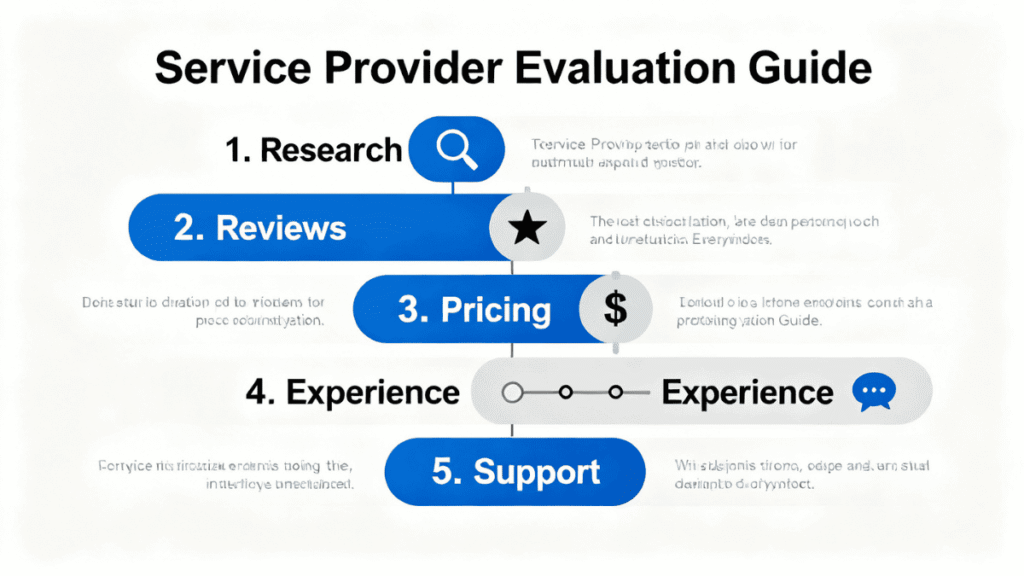
Regardless of which type of strategy consulting for startups you pursue, a consistent evaluation framework applies across all providers.
Ask for operating experience, not just advisory experience. The single biggest differentiator between consultants who create value and those who don’t is whether they have personally done what they’re advising you on. Consultants who have built and scaled real businesses bring fundamentally different insight from those who have studied how others did it. Ask directly: “Have you personally run a company through the stage we’re in? What happened?”
Demand specific, quantified results from comparable companies. Vague references to “driving growth” or “improving performance” are not sufficient. Ask for specific case studies: revenue growth percentages, cost reduction numbers, cycle time improvements, and the timeframe over which those results were achieved. ScaleUpExec, for example, documents turning a construction business from $350,000 monthly losses to profitability within four months. That specificity is the standard to hold all candidates to.
Evaluate their diagnostic process before you agree to their solution. Strong consultants ask pointed diagnostic questions before proposing solutions. They want to understand your business model, burn rate, team structure, existing processes, and specific bottlenecks before they design an engagement. A consultant who jumps to methodology before understanding your situation is solving for their process, not your problem.
Assess implementation accountability, not just recommendations. The most common failure mode in startup consulting is strategy without execution – a brilliant analysis and plan that nobody implements because the consultant’s engagement ends after delivery. Ensure that your engagement includes clear implementation accountability, embedded work alongside your team, and regular performance reviews against defined KPIs.
Clarify KPIs from day one. Before any engagement begins, agree on exactly how success will be measured. Operational efficiency improvements should be tracked against specific metrics: cost per transaction, process cycle time, employee productivity, customer onboarding duration, or revenue per employee. If a consultant cannot define what they will measure and how they will be held accountable for it, that is a significant red flag.
Watch for red flags. Consultants who offer generic solutions without understanding your specific situation, propose vague methodologies without defined outcomes, lack hands-on operational experience, or cannot share specific case studies with quantifiable results should be declined regardless of their brand name or pedigree.
For startups with a marketing function that needs both strategic direction and operational discipline, understanding how fractional CMO services for security companies and other technical sectors approach this dual mandate provides a useful framework for evaluating any marketing-adjacent consulting engagement.
Engagement Models and What They Cost
Understanding pricing structures helps founders evaluate consulting options realistically and avoid being surprised by costs mid-engagement.
Traditional consulting firms charge hourly rates between $125 and $600 depending on seniority and firm tier. Project-based engagements at boutique startup consultancies typically range from $15,000 to $100,000 depending on scope and timeline. Retainer-based operational consulting runs $5,000 to $25,000 per month depending on the seniority of the embedded consultant and the intensity of the engagement.
Fractional COO services – the model most closely aligned with operational efficiency outcomes for startups – typically price at $8,000 to $20,000 per month, representing 10 to 25% of what a full-time COO hire would cost with comparable seniority. ScaleUpExec explicitly positions this value proposition: instead of paying $300,000 or more for a full-time COO, startups access the same caliber of talent at a fraction of the cost, scaled to their actual needs.
The most important principle when evaluating engagement cost is to think in terms of outcome economics rather than hourly or monthly rates. A $15,000-per-month operational consultant who reduces your operational overhead by 20% – delivering $80,000 per month in savings on a $400,000 burn rate – generates a 5x monthly ROI. A $3,000-per-month generalist consultant who produces a strategic plan that never gets implemented generates zero ROI regardless of the low cost.
Final Thoughts
The best operational efficiency consulting for startups in 2025 is not defined by the prestige of the firm’s name. It is defined by the practitioners’ direct operating experience, the specificity of their quantified results, the clarity of their implementation accountability, and the quality of the diagnostic questions they ask before proposing solutions.
For founders operating with limited capital and narrow timelines, the fractional executive model – where seasoned operators embed part-time in your leadership team at a fraction of full-time cost – represents the most capital-efficient path to operational excellence. It provides the strategic rigor of top-tier consulting with the execution accountability of a full-time operator, at a cost structure that startup economics can actually sustain.
Start with the outcome you need. Define exactly what decision you’re trying to make or what problem you’re trying to solve. Then find a practitioner who has solved that specific problem before – and who will be accountable for the results. That discipline, more than any other factor, determines whether your consulting investment produces returns or produces reports.
Frequently Asked Questions
1. What is the best operational efficiency consulting for startups in 2025?
The best operational efficiency consulting for startups in 2025 is the type that combines experienced practitioners with hands-on implementation accountability – not traditional strategy firms that deliver recommendations without execution. Fractional COO and operational leadership services like ScaleUpExec, which embed former founders and operators who have personally scaled businesses, consistently outperform traditional advisory models for startup contexts.
2. What are affordable alternatives to McKinsey for startup growth consulting?
McKinsey, Bain, and BCG are simply not designed for startups – their pricing starts at $250,000 per engagement and their methodology is optimized for large, stable organizations, not early-stage companies building processes from scratch. The most effective affordable alternatives include fractional executive services (fractional COOs and CMOs who embed part-time at $8,000 to $20,000 per month), boutique startup-focused consultancies that engage at $200 to $400 per hour with senior practitioners, revenue operations firms that focus on commercial infrastructure, and specialized growth strategy consultants with deep expertise in your specific growth channel.
3. How does startup growth strategy consulting differ from traditional strategy consulting?
Traditional strategy consulting is designed for large enterprises that need reorientation – new market positioning, portfolio strategy, or organizational restructuring. Startup growth strategy consulting focuses on construction: building go-to-market processes from scratch, designing repeatable sales motions, creating operational infrastructure, and validating demand assumptions with tight, measurable experiments.
4. What does operational efficiency consulting for startups typically cost?
Operational efficiency consulting for startups ranges from $5,000 to $25,000 per month for retainer-based engagements, $15,000 to $100,000 for defined project engagements, and $200 to $600 per hour for advisory-only engagements. Fractional COO services – the most operationally focused model – typically cost $8,000 to $20,000 per month, compared to $300,000 to $500,000 annually for a full-time equivalent hire.
5. When should a startup hire an operational efficiency consultant?
Several signals indicate that an operational efficiency consultant is the right investment. The most important is when your CEO or founder is running day-to-day operations instead of focusing on strategy, fundraising, and company direction – the same imbalance that signals a need for a fractional CMO in the marketing function or a fractional CFO for financial leadership. Additional signals include processes that break consistently as you add customers or team members, inability to predict revenue or expenses with reasonable accuracy.

The Veepwork Team is a collective of experienced operators, founders, and senior leaders who have built, scaled, and optimized companies from early stage to the Fortune 500. Drawing on real-world execution across fundraising, operations, product, and growth, the team shares practical insights to help founders move faster and make better decisions when the stakes are high.